As a general rule, I go to theatres to see films that offer what movies do best: imparting a dramatic sense of spectacle. I can appreciate human emotion at any scale, but action requires a certain grand perspective.From Cecil B. deMille to today, directors have pushed film technology to create ever more spectacular productions, while making what is shown on the screen more realistic and immersive: black and white film transitioning to color and then 3D, silent films to stereo and surround sound.
The Limitations of 24 FPS
One aspect has remained unchanged throughout the development of film: its frame rate. Since the inception of motion pictures, 24 frames through a projector every second (a speed chosen to sync with sound in the first talking pictures) has been perceived as “good enough” for the general audience. While this does fool the eye at sedate speeds, the standard film rate breaks down whenever action takes place: a swift sword thrust, or the camera whipping around to reveal a new scene. The result is a juddering blurred mess during on-screen action, an effect that cinematographers have fought for years.
In the second decade of the 21st century a number of film auteurs, including James Cameron and Peter Jackson – the director of The Hobbit – have moved to filming their visions in 48 frames per second. Combine this with the seven-story projected height of an IMAX screen, 6.1 surround sound and 3D, and you have the definition of film spectacle.
The Effect Of 48FPS
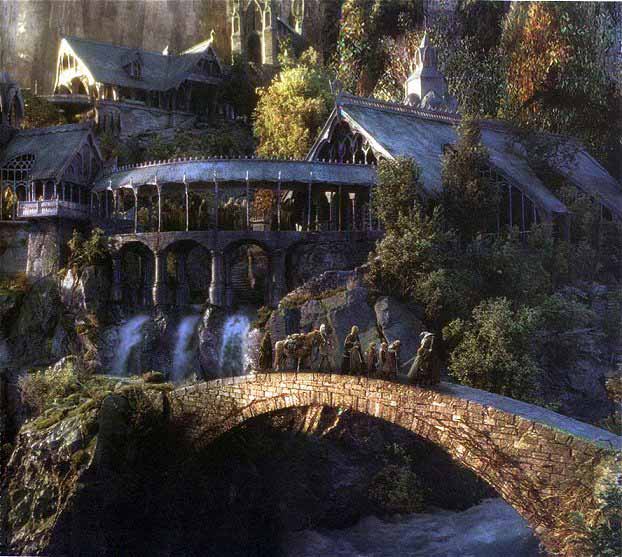 It was a pleasure to see a film set that I’ve toured projected on the screen. The movie is deeply enjoyable, and the cinematography appropriately epic, but perhaps a tad self-indulgent, with a number of unnecessary callbacks to the earlier Lord of the Rings trilogy. The dreaded Tolkien singalongs make several appearances, and their removal could have reduced the running time of the film to two hours, although the current length is hardly an endurance. It’s also very pleasing to see the criminally underrated Martin Freeman have a headlining role in a major motion picture, and interesting to note that he and Benedict Cumberbatch – who both appear in The Hobbit – have experienced such spectacular career arcs since playing in Sherlock together.
From a technical perspective, the film is particularly interesting:
- There’s much more detail packed into each frame (in a series, and with a director, already noted for verisimilitude in regards to source material). The result is that the film can appear super-saturated with color and texture. This painterly, pre-Raphaelite effect can sometimes be a bit too much to take in. Notably, many of the criticisms levelled at the pre-Raphaelite brotherhood in the 19th century – that their work was jarring, “too real”, and disorienting – are the same as those used by film critics against The Hobbit today.
- On the upside, this sensitivity to color more than compensates for the dimming associated with most stereoscopic 3D film projection.
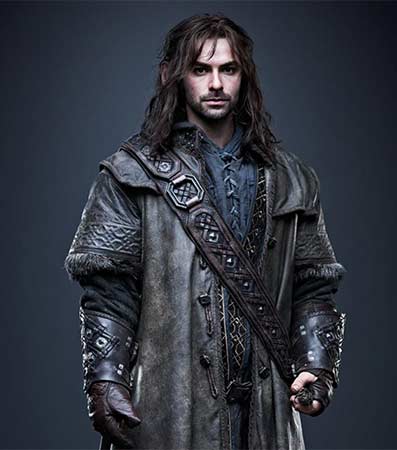 It also means that HFR is highly responsive to texture: insides from the Weta prop, costume and prosthetic makers reveals that physical elements must be made more true-to-life in order to “pass” on screen: real wooden buttons used on shirts rather than painted plastic, for example.

This implies that HFR film production will be much more detail-oriented (and by association, expensive) than films in the past… and that is not a bad thing.
Conclusion
While IMAX tickets sell for a premium ($20 per person here in Calgary) I would strongly urge moviegoers to experience The Hobbit in 3D HFR, if only for the opportunity to see the first film with a technology that will become increasingly common over time, with UltraHD high frame rate television transmissions due late this decade. I would provide a warning to the vertiginous, or those particularly susceptible to motion sickness, as the combination of techniques may prove visually overwhelming to some.