Last night saw the final television episode of my beloved House; this morning was the birthday of Sir Arthur Conan Doyle, the creator of Sherlock Holmes, a central model for the character of Gregory House. Between the two events, it seemed an appropriate time to review and wrap up the series (which will include some spoilers for the final episode).
House was originally envisaged as a “hospital CSI” series exploring medical drama, but over time the invasive CGI shots visualizing the inner biological lives of House’s patients diminished, even as the home invasion sequences (in which House and his minions broke into the patient’s homes to find the truth behind their medical mysteries) remained. Over eight seasons House became much more about the lives of its characters – driven, intelligent, often semi-dysfunctional misfits – than that of the patients.
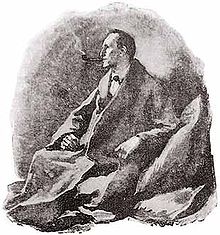 Leaning on a cane in the middle of a swirling vortex of players, and often adding to the chaos, was Gregory House: hyperintelligent, irascible, impatient, misanthropic, disdainful of social convention and driven to excess. House was very much inspired by Sherlock Holmes (who was in turn inspired by a real-life doctor), and the original character was referenced throughout the series: not only in the homonymic reflection of the character’s names (House/Holmes, Wilson/Watson) but his drug use (Sherlock’s “7% solution” of cocaine, House’s Vicodin), a shared interest in music (Holmes’ playing of the violin, House on piano and guitar (making great use of Hugh Laurie’s underappreciated musical skills) even the number of the apartment they both live in (221B)).
Central to both characters was an interest in puzzles rather than people: House constantly manipulated those around him, not only to get what he wanted and to entertain himself but in order to maintain a constant sense of imbalance, a requisite amount of unpredictability that he believed helped to generate unusual diagnoses from his team, confronted with patients who had conditions that had stumped other doctors. This manipulation also served to keep people from interacting with House himself: whirling through House’s games (often to his wry amusement) prevented people from getting close to and diagnosing the man: House was never more discomforted or dismissive than when he was forced to sit down and talk about himself.
The writers of the show were extremely skilled in building up the inevitable and ultimately inescapable consequences of this behavior: the physical and mental toll of his addiction leading to arrests and incarceration in both prison and a sanatorium (creating some of the best episodes of the series); the self-destruction of his relationships through selfishness or benign neglect. At the same time, House did stand for some difficult things: an unflinching honesty, a constant search for the truth, a willingness for self-experimentation and an unrepentant atheism.
 House’s most resistant patient was always himself, and the most hopeful line of the final program (“Everybody Dies”, a coda to the pilot, “Everybody Lies”) was his realization that he could become someone else: “I can change”. Trapped inside a burning building and apparently killed (as Holmes was at the Reichenbach Falls), House had an opportunity for rebirth: to simultaneously renew his commitment to his best friend and to play his greatest and final trick.
My major dissatisfaction with the final show was its rushed nature: using the standard trope of patient diagnosis meant that the plot sometimes felt pushed, jumping from scene to scene with little exposition. House’s internal mental debates with figures from his life gave the welcome opportunity for cameos from characters throughout the history of the series, with the notable absence of Lisa Cuddy (Lisa Edelstein), who’s departure at the end of season seven was the initiating event for the closure of the entire series. I was surprisingly okay with the decision to end: as House himself frequently insisted, it is better to let someone (or something) die on their own terms, while they hold on to a shred of self-respect, than to extend their life to the point that they are a husk of their former selves. I only wish that the producers had used the hour of the special that followed (Swan Song, a tribute to the many skilled hands behind the series) to extend the show.
House was not unique on television: medical dramas will always be with us. But it was an excellent ensemble cast built around a remarkably skilled actor. Informed by a team of talented and daring writers and some excellent directors, Laurie brought a characterization of obsession, addiction, and intellectual curiosity to the screen that asked some hard questions, and who will not soon be forgotten.